
Uzbekistan and Kazakhstan Plan a Joint Terminal at Altynkol: What Changes for Cargo from China
On 12 August 2026 Uzbekistan and Kazakhstan agreed to set up a joint logistics venture at the Altynkol terminal on the Chinese border — the gateway most China–Uzbekistan rail cargo passes through. Here is what it means for importers.
If you import into Uzbekistan from China by rail, the single most important piece of border infrastructure on your route just became the subject of a new bilateral project.
On 10–11 August 2026 a delegation from Uzbekistan’s Ministry of Transport, led by First Deputy Minister Mamanbiy Omarov, toured Kazakhstan’s cross-border logistics facilities together with Kazakh Vice Minister of Transport Zhanibek Taizhanov. They inspected the Altynkol railway station, the Kedentransservice JSC terminal, the KTZE–Khorgos Gateway dry port, the Khorgos–Eastern Gate special economic zone and the Khorgos International Centre for Boundary Cooperation.
The headline outcome: the two sides agreed to establish a joint venture at the Kedentransservice terminal at Altynkol station, aimed at keeping cargo moving uninterrupted along the China–Kazakhstan–Central Asia route, expanding container traffic and developing multimodal corridors.
Why Altynkol is the gateway that matters
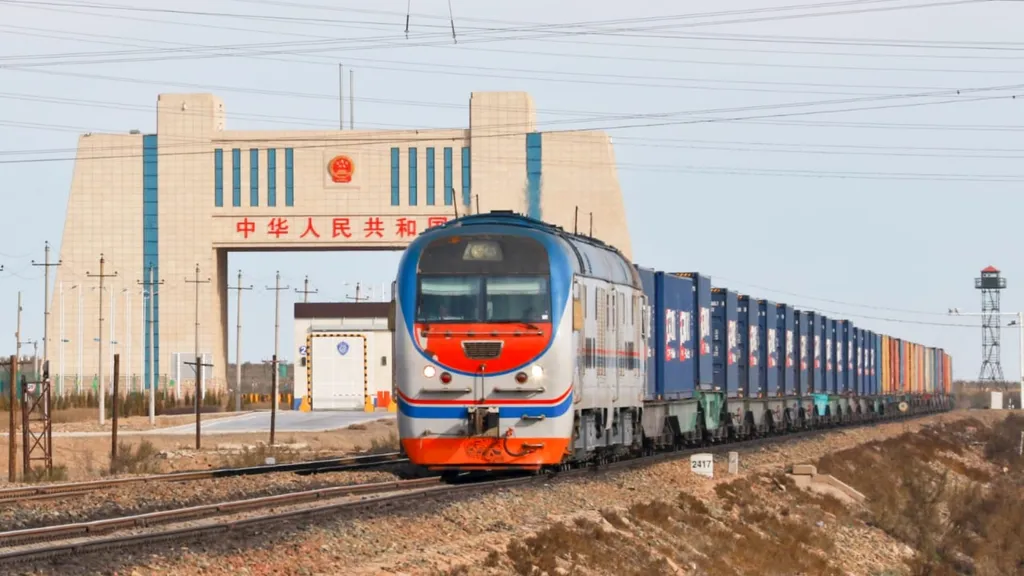
Altynkol sits on the Kazakh side of the border, directly opposite China’s Khorgos. Together the two stations form the main rail gateway between China and Kazakhstan — which makes them the main gateway for goods travelling onward to Tashkent, Chukursay and the rest of Uzbekistan. A second option is emerging in the shape of the China–Kyrgyzstan–Uzbekistan railway, now under construction; we looked at how much traffic is already moving through these crossings in our piece on Xinjiang’s two rail gateways passing 6,000 trains.
There is a technical reason the junction matters so much. The two sides of the border run on different track gauges — 1,435 mm in China, 1,520 mm across Kazakhstan and the rest of the CIS. Every container must either be lifted onto different platforms or have its bogies swapped. That single operation is where delays and handling costs are born, so terminal capacity and coordination at Altynkol feed straight into your transit times.
The volumes already flowing
Uzbekistan’s rail operators are pushing hard on this corridor. In the first quarter of 2026 alone, 76 container block trains were dispatched from Uzbekistan to China via Altynkol, carrying 4,992 containers of mineral fertiliser, potash, aluminium, mung beans and polyethylene. Uztemiryulkonteyner has also launched a direct container block train from Tashkent to Altynkol — 57 flatcars covering roughly 1,300 km in about two days — partly to cut down on empty return runs.
The underlying trade keeps expanding too. Uzbekistan’s trade with China reached $11.26 billion in January–July 2026, up 33.6% year on year, while total Uzbek imports rose 17.8% to $29.6 billion. China now accounts for 22.7% of Uzbekistan’s total foreign trade — so more cargo is heading for the same border gateway every month.
What it means for importers
- Potentially smoother transit. A jointly operated terminal at the border should improve cargo handling and coordination with onward rail services.
- Better equipment availability. Fewer empty runs is good news when you need platforms and containers.
- Real unknowns remain. Neither ministry has disclosed the venture’s ownership structure, investment or launch date, and the practical effect will depend on terminal capacity, wagon and container supply, schedules and customs procedures.
- Don’t depend on a single mode. For time-critical or relatively small consignments, road freight across the Xinjiang crossings remains a flexible alternative.
What to do before your next shipment
- Confirm with your forwarder which corridor and which border crossing your cargo actually uses — Kazakhstan transit via Khorgos/Altynkol, or the CKU route.
- Build a realistic buffer into lead times; the fourth quarter is peak season on this lane.
- Prepare documents early so you are not paying demurrage at the destination terminal.
UZLogis moves bulk cargo from China to Uzbekistan by rail freight, road and air, handles customs documentation and tracks every consignment through to your warehouse. Talk to us before your next booking and we will match the route and mode to your cargo.