
Uzbekistan’s Logistics Infrastructure Boom: What Importers Should Know
Uzbekistan’s cargo turnover rose 43% in H1 2026, Tashkent Airport’s cargo terminal expanded to 120,000 tonnes, and the China–Kyrgyzstan–Uzbekistan railway may open ahead of schedule. UZLogis breaks down the impact for importers.
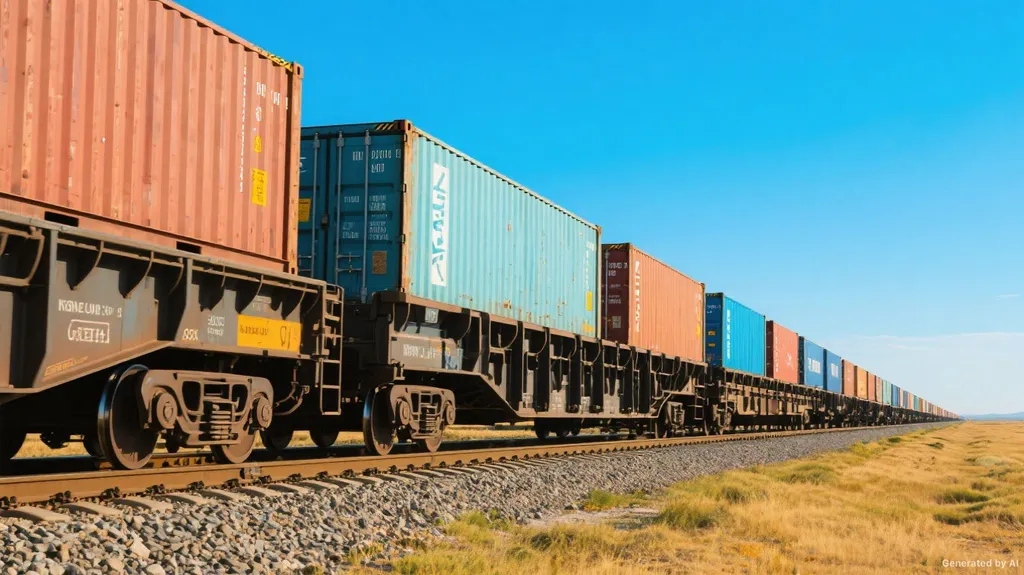
Uzbekistan is rapidly turning from a landlocked Central Asian republic into a strategic land bridge between East and West. In the first half of 2026, the country’s total cargo turnover jumped by 43%, while transit cargo transport climbed 35%. These are not just macro numbers—they signal that the volume, speed, and reliability of goods moving into and through Uzbekistan are changing fast.
Transport Minister Ilkhom Mahkamov has made it clear that developing international freight is a presidential priority. Today more than 5,100 cargo trucks cross Uzbekistan’s borders every day, up 70% over the past three years. The government is now pushing to modernize border checkpoints, build nine new logistics centers, and introduce a single-window clearance system. For shippers using road freight, that means shorter border delays and more predictable lead times.
Air cargo capacity is taking off
Tashkent International Airport’s new cargo terminal can now handle up to 120,000 tonnes of cargo and mail per year—four times the capacity of the old facility. The terminal processed 88,000 tonnes in 2025 and is on track for 92,000 tonnes in 2026.
In the first six months of 2026 alone, over 48,000 tonnes moved through the terminal, up 33.2% year on year. The facility can process around 500 tonnes per day and includes dedicated zones for perishables, pharmaceuticals, live animals, and high-value goods. That makes air freight from China to Uzbekistan an increasingly reliable option for time-sensitive and temperature-controlled shipments.
The China–Kyrgyzstan–Uzbekistan railway is accelerating
One of the most closely watched projects in the region—the China–Kyrgyzstan–Uzbekistan (CKU) railway—could be completed at least a year ahead of schedule. According to Minister Mahkamov, roughly 17% of construction is already finished, with more than 10,000 workers and over 7,000 pieces of specialized equipment on site.
Freight volumes between China and Uzbekistan moving via Kyrgyzstan have grown sevenfold. The Kashgar–Torugart–Makmal–Jalal-Abad–Andijan route will give Uzbekistan a direct rail link to China and, through onward connections, access to the Indian Ocean via Karachi and Gwadar, opening South Asian markets with a combined population of about 2 billion people. Transit times on the corridor are expected to drop to around eight days—roughly one-third of traditional routes. This is a major opportunity for rail freight customers moving regular, high-volume cargo from China.
Logistics centers and dry ports are expanding
Uzbekistan currently operates 27 logistics centers meeting international standards, 24 of which are listed in the UN ESCAP dry port registry. Yet only one of them qualifies as a top-tier Category A facility. To close the gap, the government has drafted a resolution offering extra support for new Class A international logistics centers.
Modern transport and logistics centers are being developed in Tashkent, Navoi, and Namangan, while Navoi Airport is evolving into a cargo hub on Eurasian air routes. Together, these investments strengthen Uzbekistan’s ability to receive, store, and redistribute Chinese imports at scale.
Practical takeaways for importers
The infrastructure build-up gives importers from China several concrete advantages:
- Faster delivery options: an expanded air cargo terminal and a new rail corridor shorten transit windows;
- Lower border friction: checkpoint modernization and single-window procedures reduce customs delays;
- Mode flexibility: the ability to combine road, rail, and air lets you match the right transport mode to each shipment;
- Better storage conditions: Category A centers and cold-chain zones make handling perishable and high-tech goods easier.
UZLogis helps importers turn these infrastructure gains into real supply-chain savings. We manage freight from China to Uzbekistan by road, rail, and air, handle customs documentation, track shipments, and coordinate final delivery to your warehouse. As we discussed in our earlier piece on the first CKU multimodal freight train from the Yangtze River Delta, these new corridors are reshaping how importers should plan their China sourcing strategy.
Contact UZLogis today to find out how Uzbekistan’s logistics boom can help you move cargo faster and more cost-effectively from China.