
Transformers and Power Equipment from China to Uzbekistan: Heavy Cargo Guide
62 of Uzbekistan's 78 high-voltage substations need modernization and solar capacity is growing by gigawatts. How to ship transformers and switchgear from China: dimensions, permits, and the routes that actually work.
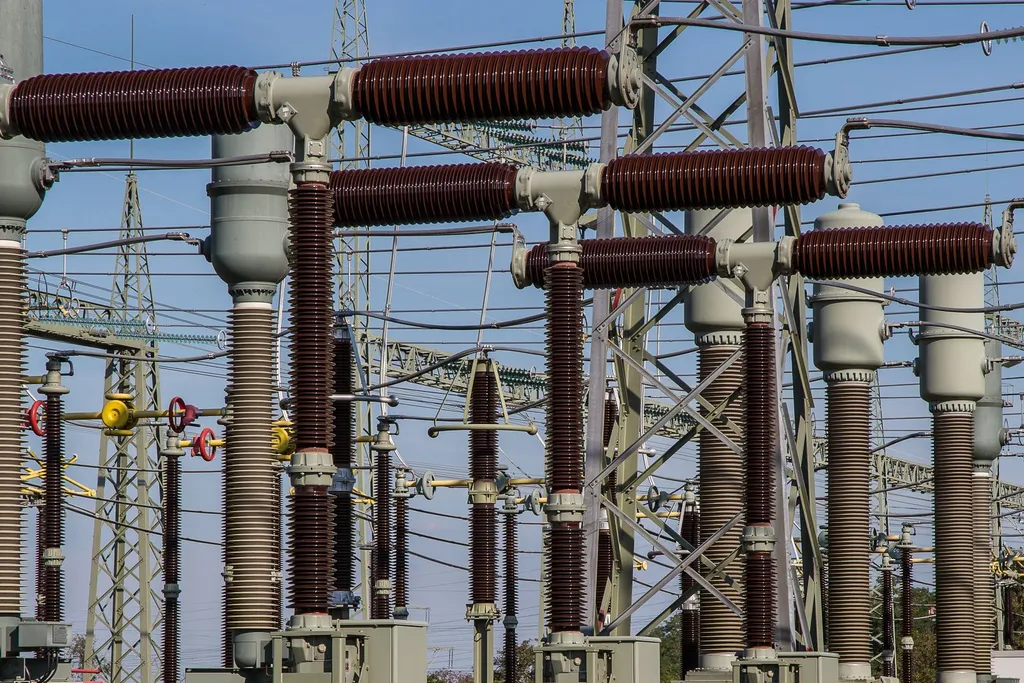
Uzbekistan’s power system is being rebuilt, and that directly drives demand for heavy-cargo logistics. According to the World Bank, 62 of the country’s 78 high-voltage substations require urgent rehabilitation; a new 500 kV Koltsevaya substation is under construction in Tashkent region, where two 801 MVA autotransformers will be installed.
The second source of demand is solar and wind generation. Per the Asian Development Bank, toward a 25 GW target by 2030, about 8 GW of wind and solar capacity has been commissioned since 2021 (including roughly 2 GW of rooftop solar). Technical losses in distribution networks run around 14%, and transformers in many areas operate above safe loading thresholds.
A localization program has also started: $823.9 million has been allocated across 12 projects to manufacture the electrical components the country currently imports. But those plants are not running yet — today a large share of high-voltage equipment is still imported, and the main supplier is China.
A transformer is not ordinary container cargo: four hard limits
You cannot ship a transformer like a parcel — it hits four limits at once:
- Dimensions. A standard 40HQ has an internal width of 2.35 m and a height of 2.39 m. The external dimensions of 110–220 kV transformers are frequently larger.
- Weight. A 40-foot flat rack carries about 40 tonnes (gross up to 45 tonnes); the 20-foot version about 31 tonnes; an open top about 26.5 tonnes. Transformers in the 110–220 kV class typically weigh 40–200 tonnes, and large 500 kV autotransformers run to hundreds of tonnes — these travel disassembled (tank, bushings, radiators and oil separately).
- Rail loading gauge and gauge change. At the China–Kazakhstan border (Dostyk / Altynkol) the track changes from 1435 mm to 1520 mm, so cargo is transloaded or the platform is swapped. Cargo outside the loading gauge does not move by rail at all.
- Permits. In Uzbekistan cargo is oversized when wider than 2.55 m, taller than 4 m, longer than 20 m or heavier than 38 tonnes — route approval and road-authority permits are required. China has comparable limits.
Three main schemes
Rail: flat racks and open tops
The most stable option for equipment that fits the loading gauge and weighs up to 40 tonnes. Central Asian trains from Khorgos or Alashankou reach Tashkent (Chukursay, Sergeli) or the station nearest the project site in about 10–14 days.
- Flat rack — no side walls, crane-loaded from the side or top; the primary choice for wide, heavy equipment.
- Open top — for tall but standard-width cargo; lower payload, so it is used less for heavy transformers.
- Platform container — for loads above 45 tonnes that still fit the gauge.
Road: low-bed trailer
If dimensions exceed the rail gauge, the road is the only option. The route runs Khorgos — Almaty — Shymkent — Tashkent on 5-axle (45 t) and 10-axle (up to 90 t) low-beds. The advantage is door-to-door delivery straight onto the site; the downside is permits, bridge and tunnel surveys along the route, and weather exposure.
Combined scheme: rail plus low-bed
In practice the optimum for many projects: equipment travels by rail to Shymkent or Tashkent, then goes to site by low-bed. This combines rail’s reliability with road flexibility and lowers cost on the long leg.
| Cargo type | Recommended scheme | Main reason |
|---|---|---|
| Up to 40 t, fits the gauge | Flat rack (rail) | Stable schedule, minimal handling |
| Up to 40 t, tall but narrow | Open top (rail) | Top loading |
| Above 45 t, within gauge | Platform container | High payload |
| Outside the gauge | Low-bed trailer (road) | No alternative |
| Above 90 t / very large | Combined or disassembled | Road and rail limits |
Engineering details: this is where losses begin
- With or without oil? Heavy transformers are often shipped oil-free (nitrogen-filled), which cuts weight but demands strict control of sealing and moisture. The oil travels separately in drums.
- Shock recorders. Every transformer gets shock and tilt indicators — their readings must be checked on receipt.
- Securing. Lash to the frame, not just the tank; anti-slip bedding; calculated tie-down points.
- Bushings and radiators are packed separately — the most vulnerable parts in transit.
- Site crane. Establish in advance what crane the site has: a 100-tonne transformer cannot be lifted by a 50-tonne crane.
- Route survey. Bridges, overpasses, turning circles and narrow streets are checked before loading, not after.
Permits: time is the most expensive resource
The main cause of delay in project cargo is permitting. The practical sequence:
- China — export clearance and the oversize road-exit permit.
- Kazakhstan — transit permit (route and weight limits).
- Uzbekistan — route approval and road-authority permit for the oversized unit.
That is why 6–8 weeks of planning is normal for transformer projects: permits, a special platform, crane and site preparation are all resolved in parallel. In winter (December–March), mountain roads and queues at Khorgos can add 3–5 days.
Customs and documents
- HS codes — liquid-dielectric transformers fall under 8504.21 (up to 650 kVA) and 8504.23 (above 10,000 kVA); converters and reactors under 8504.3x/8504.4x. A wrong code means the wrong rate and an extra inspection.
- VAT at 12% and customs processing fees (in BRV) add to the budget.
- Certificate of origin — since late February 2026, its absence can add 5–20% duty.
- Conformity documents — Uzbek standardization requirements apply to electrical equipment; certificates are ordered before shipment, because testing takes time.
- Technical documentation — dimension drawings, weight distribution, lifting points: both customs and road permits depend on them.
Bottom line
Demand for transformers and power equipment in Uzbekistan will stay strong for years: the substation modernization program, the 500 kV ring and grid connection of solar plants all need the same equipment. The winner in this segment is not the forwarder with the lowest tariff, but the one that calculated permits and routing in advance and delivered to site on time.
UZLogis handles project cargo from China to Uzbekistan in one window: scheme selection, special platforms, permits and customs clearance. On capabilities: rail freight and road freight. For heavy units, contact us — send the technical brief and we will calculate route and lead time.