
Steel Structures from China to Uzbekistan: Project Cargo Logistics
In 2024 steel structures were China's seventh-largest export to Uzbekistan at $200M. How to ship long, heavy fabricated steel: loading options, batch sequencing by erection plan, and the HS codes that trip up declarations.
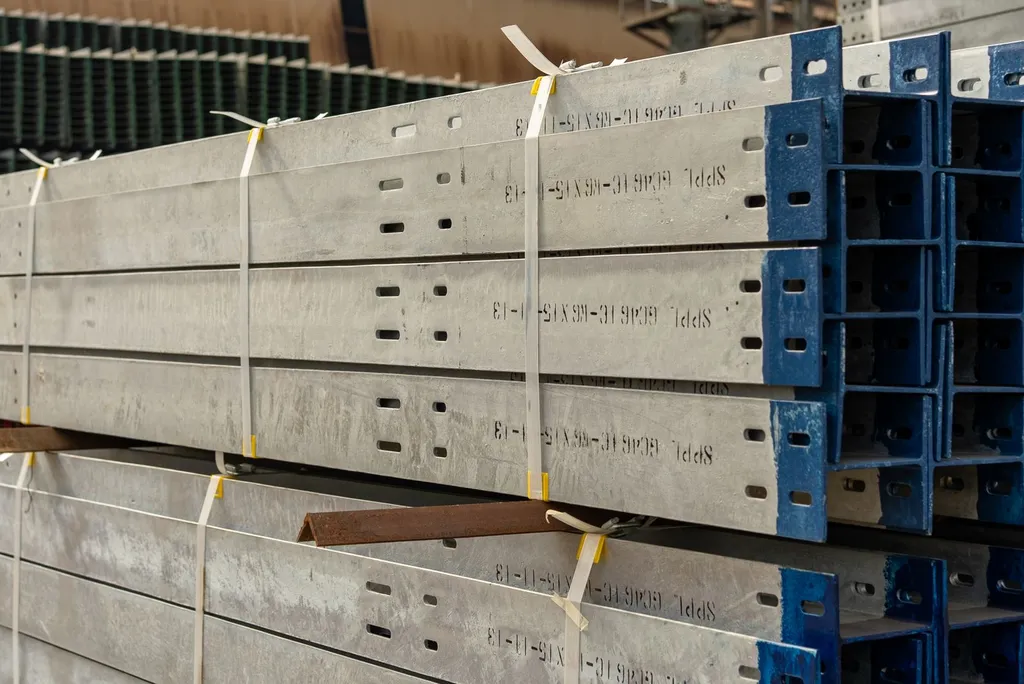
Steel structures are consistently among China’s largest exports to Uzbekistan: in 2024 they were worth $200 million — about 1.7% of total exports and seventh place by value (China Ministry of Commerce data).
Several factors drive demand: construction volumes grew 13.8% in the first half of 2026, industrial zones and the New Tashkent project continue, and steel structures for solar plants have become a major segment of their own — a Chinese manufacturer delivered tracker structures for a 360 MW project in Navoi region. China–Uzbekistan trade turnover reached $4.6 billion in Q1 2026 (versus $3.0 billion a year earlier).
But treating this cargo as “just steel” is a mistake: a fabricated structure is long, heavy and surface-sensitive.
Three characteristics: length, weight, surface
- Length. A 40HQ has about 12 metres of internal length. A truss or column 12–13 metres long does not fit a standard container — it needs a flat rack or open top.
- Weight. A 40HQ carries about 26.5 tonnes; a 20GP up to 28 tonnes. Factory structures stack densely: the box fills quickly, and overweight means surcharges and re-handling.
- Surface. Hot-dip galvanised and painted surfaces suffer most in transit: chain marks, abrasion, moisture. Accepting a rusted structure on site means rework costs later.
How to load: four options
| Structure type | Recommended method | Comment |
|---|---|---|
| Members up to 12 m, up to 26 t | 40HQ container | Cheapest, enclosed protection |
| Trusses 12–13.5 m | 40-ft flat rack | The only length solution |
| Heavy profiles up to 28 t | 20GP | Higher weight limit |
| Large blocks outside the gauge | Low-bed or open platform | Route and permits required |
By rail from Khorgos or Alashankou to Tashkent, transit is usually 10–14 days; by road 12–20 days, but door-to-door and directly onto site. Capabilities: rail freight and road freight.
Loading and securing: the details save money
- Timber dunnage — wood between every steel layer so metal never rubs on metal; chains and cables only over dunnage.
- Protect the galvanising — soft pads at lifting points, protection on sharp edges; sometimes full-surface film wrapping.
- Secure long members — at least two points, with cross-lashings against shifting; on a flat rack the ends must stay within the platform.
- Marking — a position number (mark) and batch number on every member, matching the erection drawing.
- Fasteners separately — bolts, nuts and washers in separate boxes by erection sequence; if they get mixed, site assembly stops.
- Moisture — containers produce condensation; on a long leg desiccant and dunnage are mandatory.
Batch splitting: follow the erection sequence
On large projects structures arrive in several batches, and the most common mistake is sending everything at once. The right approach:
- Take the erection schedule and identify which blocks are needed first.
- Form each batch on the principle “one erection stage = one shipment”.
- A separate packing list per shipment: position, quantity, weight, dimensions.
- Align the delivery schedule with available site storage — cargo that arrives too early blocks the yard.
This cuts warehousing and double-handling costs, but only works when supplier and builder work to one schedule.
Customs: the codes get mixed up
- 7308 — structures and parts of structures (the main heading).
- 7318 — bolts, screws, nuts: separate heading, separate rate. Even inside a kit, separate declaration is sometimes required.
- 7210 / 7208 — flat-rolled and profiles, if shipped as raw material rather than a fabricated structure.
- 7306 — welded tubes and profiles.
A wrong code means the wrong rate and an extra inspection. In addition:
- VAT at 12% and customs processing fees (in BRV) add to the budget.
- Certificate of origin — since late February 2026, its absence can add 5–20% duty.
- Conformity — checked against the Cabinet Resolution No. 43 (30.01.2021) list: the structure itself is usually not subject to mandatory certification, but certain fasteners, coatings and fire-protection materials may be.
- Contract registration — the foreign trade contract must be registered in the unified electronic system (UEISFTO) before operations begin; a delay here means the cargo sits at the border.
- AEO — since August 2026 mutual recognition between China and Uzbekistan applies: certified suppliers’ cargo is inspected less often.
Bottom line
A steel structure is not a one-off shipment but a schedule-driven process: correct batch splitting, marking that follows the erection sequence, a protected surface and accurate codes. A week of delay on site equals a stopped erection crew.
UZLogis handles project cargo in one window: batch splitting, containers and flat racks, documents and customs clearance. Contact us — send drawings and the erection schedule, and we will propose a delivery plan.