
Tire Exports to Uzbekistan: Shipping and Customs Guide
In 2024 tires were China's sixth-largest export to Uzbekistan at $250M. How to ship a heavy, heat-sensitive product: weight limits, container loading, the 4011 vs 4012 code trap and mandatory certification.
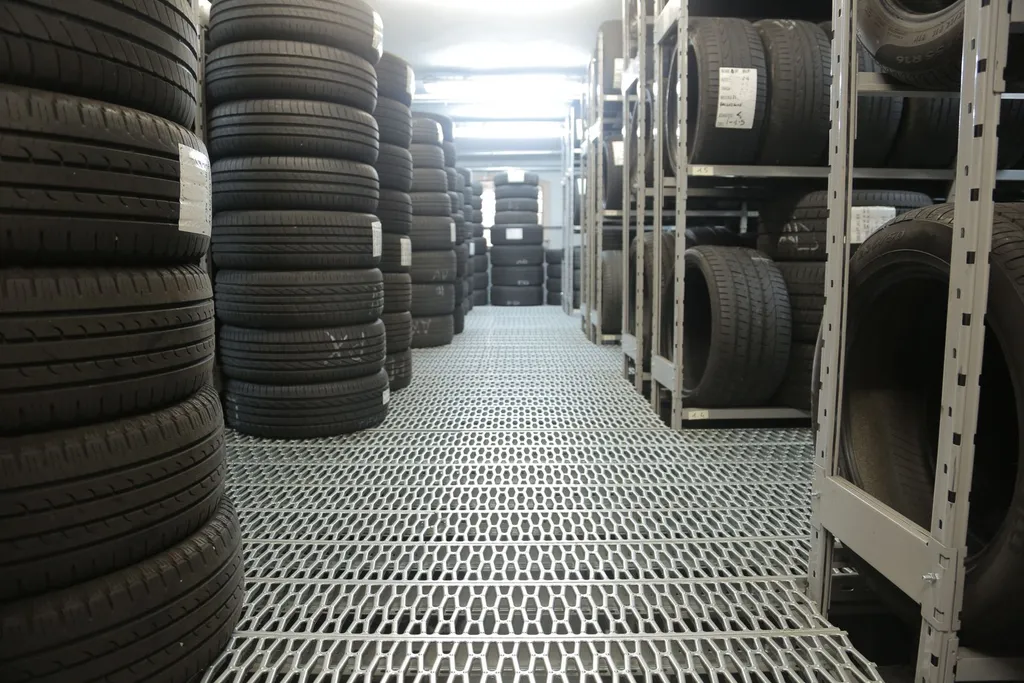
Tires are consistently among China’s ten largest exports to Uzbekistan: in 2024 they were worth $250 million — about 2.1% of total exports and sixth place by value (China Ministry of Commerce data).
There is also domestic production: the Birinchi Rezinotexnika Zavodi (BRZ) plant in Angren produces up to 3 million passenger and light commercial tires a year under the BARS brand, plus 200,000 agricultural tires and 100,000 metres of conveyor belt. It was built with Chinese contractors (CNCEC and Poly Technologies) for over $200 million and was sold to Russia’s Tatneft in 2023.
That does not remove imports: heavy truck tires (TBR), construction and mining tires, and uncommon sizes are still mostly imported. So three practical questions remain: which scheme to use, how to load, and what customs will demand.
Why tires look cheap but ship expensive
The defining feature of tires is density. This is not light cargo — what runs out first is not container volume but the weight limit:
- A 40HQ has a permitted payload of about 26.5 tonnes.
- Heavy truck tires (22.5”) fit 250–275 units per container, roughly 17.5 tonnes — the box is full well before the weight limit.
- Nesting smaller tires inside larger ones saves 30–50% of volume — but only works for new tires that resist deformation.
Practical conclusion: for a heavy batch, two 20GP containers or splitting into two shipments is often cheaper than one 40HQ, because you avoid overweight surcharges and re-handling.
Three schemes: rail, road and groupage
Rail (40HQ / 20GP) — for large, planned batches
Central Asian trains from Khorgos or Alashankou to Tashkent (Chukursay, Sergeli) take about 10–14 days. Good for tires: a closed container protects against sun and dust, and weight rules are clear. Downside: a truck is still needed from the station to your warehouse. Capabilities: rail freight.
Road (FTL) — when you need door-to-door
A curtain-sided truck or container chassis from Khorgos straight to your warehouse, 12–20 days. Advantage: no re-handling and a precise address; downside: queues at Khorgos in winter and road conditions. More: road freight.
Groupage (LCL/LTL) — for small batches
Up to 2–3 tonnes it makes sense to ship with other cargo. Because tires are dense, groupage is often priced by weight rather than volume — check the tariff basis in advance.
Loading and securing: tires have their own rules
- Upright, in rows — tires are not laid horizontally in a compressed “pie”; they stand vertically and lean on each other.
- No over-tensioned straps — a strap pulled too tight deforms the profile and the tire looks defective at sale.
- Nesting only for new tires — do not stuff used or low-profile tires inside others.
- Away from oil and chemicals — rubber degrades on contact with petroleum products; the container floor must be clean.
- Moisture and heat — floor dunnage and desiccant so condensation does not form inside the tires; an open flatbed is unsuitable in summer.
- Labels and batch numbers — size, model and batch on every bundle: customs checks run on this data.
- On receipt — seal, piece count and appearance; crushed beads and sidewall cuts should be photographed immediately.
Customs: do not mix up 4011 and 4012
- New tires — 4011. The main heading; the rate follows the current tariff.
- Retreaded and used tires — 4012, where duty is substantially higher (around 30% in the tariff schedule). Declaring used tires as new is the most expensive mistake: the cargo is detained, a penalty is assessed and the batch is late.
- Mandatory certification. Tires are on the list of products subject to mandatory conformity assessment (Cabinet Resolution No. 43 of 30.01.2021; the list was updated by Resolution No. 472 of 07.09.2026 and applies from 09.09.2026). For tires the Uzbek standard based on UNECE Regulations 30/54 applies (O’z DSt 35.30:2017); a certificate is issued for one to three years.
- Utilization fee — tires, like vehicles, are subject to the utilization fee; calculated in BRV and paid before or together with the declaration.
- VAT at 12% and customs processing fees (in BRV).
- Certificate of origin — since late February 2026, its absence can add 5–20% duty.
- AEO — since August 2026 mutual recognition between China and Uzbekistan applies: cargo from certified suppliers is inspected less often.
Bottom line
Local production covers the passenger segment, but heavy truck, road-building and non-standard sizes remain import-dependent. This segment is won not by the cheapest tariff but by accurate weight calculation, careful loading and a certificate prepared in advance.
UZLogis delivers tire batches by container or truck, controls loading and handles customs clearance. Contact us — send the type, size and volume, and we will calculate container fill and transit time.