
Uzbekistan Pushes the A380 to Four Lanes Between Nukus and Urgench: What It Means for Cargo From China
A 25 km stretch of the A380 between Nukus and Urgench is being widened from two lanes to four, 90% complete and due by end-2026. Here is why the last mile into Khorezm and Karakalpakstan is getting faster.
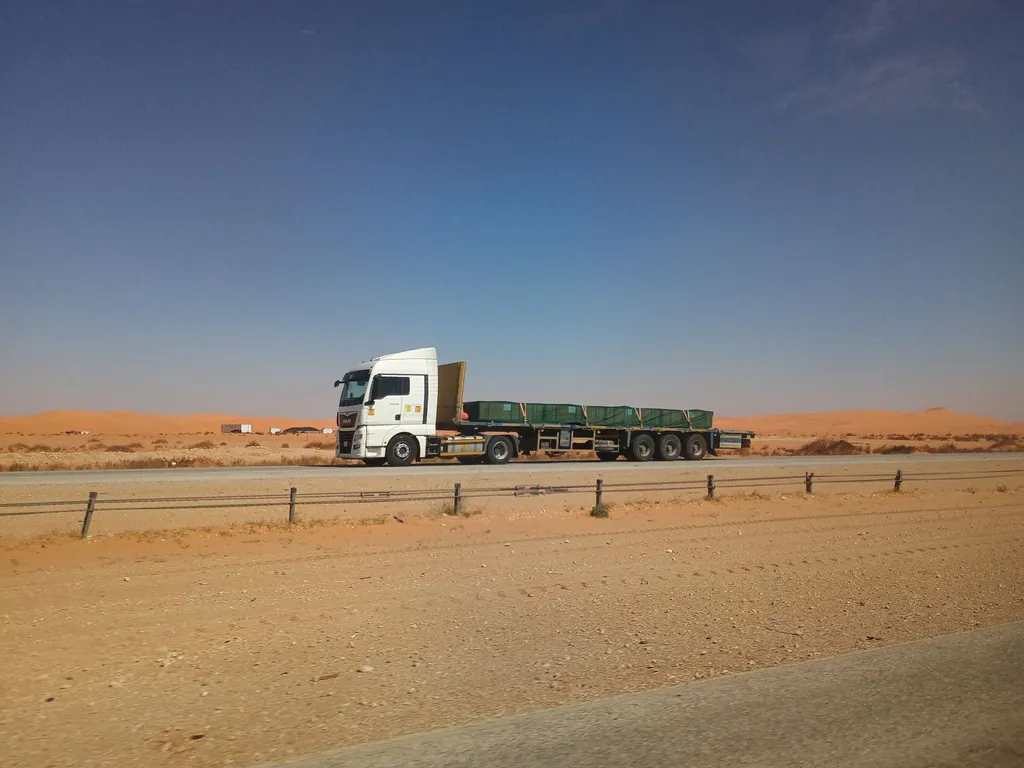
For importers moving goods from China to western Uzbekistan, the slowest part of the journey is rarely the border. It is the domestic run at the end. The project Euronews reported on 4 November 2026 targets exactly that leg: a 25-kilometre section of the A380 highway between Nukus and Urgench in Karakalpakstan is being widened from two lanes to four. Construction is about 90% complete and is scheduled to finish before the end of the year.
Why should a Chinese supplier’s customer in Khorezm care? Because Urgench and Nukus are the longest hauls on the China–Uzbekistan map. Anything that shortens the final stretch shortens the whole order cycle — and makes seasonal stock planning less of a guess.
What is actually being built
According to Euronews, the 25 km reconstruction costs $48.7 million (€43.6 million) and sits inside a wider regional transport programme backed by the Asian Development Bank. Bahodir Boltaev, deputy director of the ADB project implementation group, told Euronews that roughly three kilometres of concrete paving and one overpass are still outstanding.
The technical detail matters more than the headline. This is not simply an extra lane each way: the design includes dedicated U-turn overpasses so vehicles can change direction without crossing oncoming traffic. On a corridor used by heavy trucks, that removes a well-known accident and queueing point.
Traffic volumes show how loaded this road already is. Around 6,000–7,000 vehicles used it daily before the works; once complete, that figure is expected to reach 14,000–15,000.
Kungrad–Beyneu shows what the upgrade is worth
The second piece of the same trunk road — the 240 km running from Kungrad toward the Kazakh border — was rebuilt back in 2024, and carriers are already measuring the difference. Damir Mamutov, head of the international road carrier Promizvest Servis, told Euronews that the 240–250 km between Kungrad and Beyneu used to take at least 10–12 hours. It now takes three to four.
He also pointed to maintenance: previously a truck needed tyre and suspension work after one or two trips, and that has become rarer, cutting operating costs. For a haulier running a fixed number of rigs westward, road quality converts directly into turnaround and vehicle life — and eventually into the rate a shipper is quoted.
How this connects to cargo from China
Freight from China reaches Khorezm and Karakalpakstan by two main routes:
- Through Tashkent (the standard route). Enter at Khorgos or Alashankou, cross Kazakhstan to Tashkent, then head west along the Samarkand–Navoi–Bukhara axis to Urgench and Nukus.
- Through western Kazakhstan. The Beyneu–Kungrad approach, entering the country from the north-west.
In both cases the A380 is the last link: goods are distributed inside Karakalpakstan and Khorezm along this road. That is why the Nukus–Urgench widening compresses the final mile of a China-origin shipment, particularly for lots heading to Nukus, Khodjayli and Chimboy, or on to Urgench and Khiva.
Our freight service to Urgench and Nukus covers both approaches, with an average transit of 10–16 days and the mode chosen around the cargo itself. For heavy or oversized lots, road freight is often the only workable option: rail capacity into Urgench and Nukus is limited and container slots are few.
Demand in the region is rising in any case. Uzbekistan’s State Statistics Committee reported on 28 October 2026 that imports rose 15.7% year on year to $39.6 billion in January–September. More imports mean more trucks on domestic trunk roads; without widening, that growth turns into congestion. We covered the wider picture in our piece on Uzbekistan’s logistics infrastructure build-out.
A wider road does not fix the border
The most useful line in the Euronews report is its conclusion, not its numbers: border delays remain a serious obstacle and require further investment in cross-border procedures. In practice that means:
- queueing and document checks at the neighbouring border can still eat more time than the drive itself;
- winter winds and dust storms, and summer heat, can delay a westward run;
- axle-load and weight limits have to be engineered into the plan for heavy cargo.
Practical checklist before you book a western shipment
- Match the route to the cargo. Tashkent is steadier for urgent and smaller lots; the Beyneu–Kungrad corridor can be more economical for large, heavy consignments.
- Build in buffer. Border queues will outlast the roadworks — allow at least 3–5 extra days on the plan.
- Fix the paperwork early. Mismatched cargo descriptions, weights or values are the single most common cause of delay.
- Plan heavy and awkward loads separately. Permits, overpass clearances and trailer type need to be agreed in advance.
- Respect the season. From November to February weather in the western regions materially affects transit times.
Bottom line
Four lanes between Nukus and Urgench is a modest project with a real effect: it shortens the last leg of a shipment that started in China and ends in Urgench, Khiva or Nukus. The Kungrad–Beyneu rebuild already demonstrated the mechanism — when 10–12 hours becomes three to four, truck turnaround and cost structure change, and rates eventually follow.
If you ship to Khorezm or Karakalpakstan regularly, we will model the route and transit against your actual cargo and show you, in numbers, which corridor is faster and which is cheaper.